
Understanding the Political Relationship Between Poverty and Power
Every election tells two stories.
The first is about citizens deciding who should govern.
The second is about politicians deciding which citizens matter most.
These two stories unfold simultaneously.
Citizens make political choices.
Politicians make political calculations.
And where those choices and calculations meet, democracy takes shape.
Few relationships illustrate this more clearly than the relationship between poverty and politics.
Across Kenya and many developing democracies, poorer citizens often participate actively in elections while politicians devote enormous amounts of time, money and attention to winning their support.
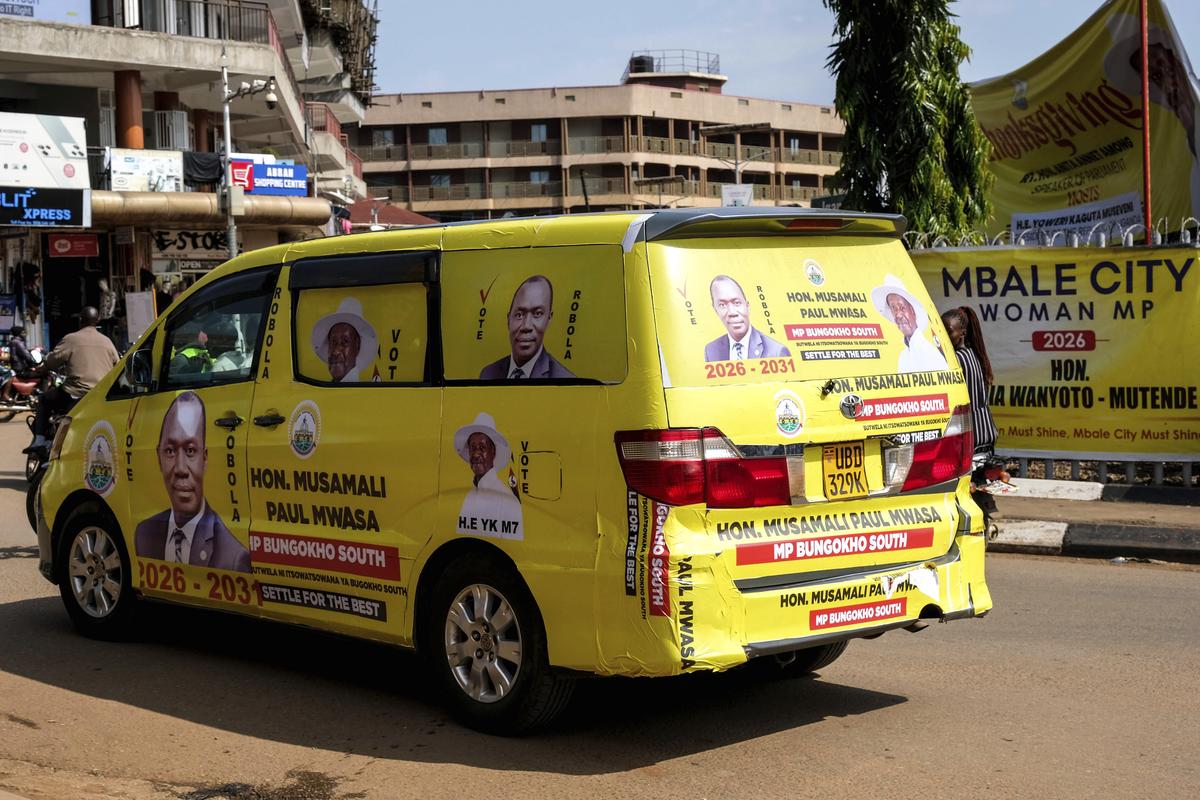
Campaign rallies are concentrated in low-income neighbourhoods.
Candidates attend community fundraisers.
School bursaries are promised.
Markets become campaign venues.
While churches, youth groups and local associations suddenly receive unprecedented political attention.
To many observers, this relationship appears straightforward.
Politicians target poorer communities because they are easier to influence.
Poor citizens respond because they need immediate assistance.
Yet this explanation only scratches the surface.
The relationship between poverty and politics is far more complex.
Poor citizens are not politically important simply because they are poor.
Nor do politicians engage them simply because they are vulnerable.
Rather, poverty changes the incentives on both sides.
It changes how citizens experience politics.
And it changes how politicians compete for power.
Understanding modern democracy therefore requires looking beyond elections themselves and examining the political relationship that develops between citizens living with economic insecurity and politicians seeking public office.
Only then can we understand why politics matters so deeply to those who have the least.

Politics Matters Differently Depending on Your Circumstances
One of the greatest assumptions in democratic politics is that elections mean the same thing to everyone.
They do not.
Two citizens may cast their ballot at the same polling station on the same day, yet the election may carry entirely different meanings for each of them.
A financially secure professional may evaluate candidates based on taxation policies, constitutional reform, economic growth, business regulation or foreign policy.
A parent struggling to pay school fees may ask different questions.
Will food prices come down?
Will the local hospital have medicine?
Will the road to the market finally be repaired?
Or will my children receive bursaries?
Neither voter is necessarily more informed than the other.
They are simply responding to different realities.
Politics is experienced through everyday life.
The more a person’s daily wellbeing depends on public services and government decisions, the more immediate politics becomes.

For wealthier citizens, poor governance is often frustrating.
For poorer citizens, poor governance can determine whether children remain in school, whether crops reach the market, whether treatment is available at the local clinic or whether a family survives another month.
Politics therefore becomes less about ideology and more about survival.
This explains why poorer citizens are often far more politically engaged than stereotypes suggest.
Indeed, political disengagement is often easier when one possesses private alternatives.
Private schools. Private healthcare. Private security.Private transport. Private water supply. Private legal representation.
The fewer alternatives citizens possess, the more government decisions shape everyday life.
Politics therefore matters most where dependence on public institutions is greatest.
Politics Is Also a Marketplace of Needs
Elections are equally competitions between needs.
Every community enters an election carrying its own priorities.
Farmers think about fertilizer prices and market access.
Young graduates think about employment.
Business owners worry about taxation and regulation.
Parents think about education.
Patients think about healthcare.
Informal settlements think about sanitation, housing and security.

Good politicians study these needs carefully.
Campaigns are therefore not random collections of promises.
They are carefully designed responses to what different communities value most.
The poorer a community becomes, the more immediate those needs often are.
Consequently, campaign promises become increasingly concrete.
Roads. Water. Electricity. Food. Cash transfers. Bursaries. Market stalls.Health centres.
These are not accidental campaign themes.
They reflect the everyday realities of the communities being addressed.
Politics therefore becomes deeply personal.
Citizens are not simply choosing leaders.
They are also choosing between competing promises about how their lives might improve.
How Politicians Think: Elections Are Exercises in Strategy
Accordingly, understanding why politics matters to poorer citizens tells only half the story.
The other half requires understanding how politicians think.
Political campaigns are strategic operations.
Imagine you are managing a presidential campaign.
Election day is six weeks away.
Your budget is limited thus your candidate cannot visit every county, hold rallies in every constituency or meet every voter.
Every decision now becomes strategic.
Where should the campaign spend its remaining resources?
Which counties deserve another visit?
Which communities are already politically secure?
Which areas are persuadable?
Where will one additional rally produce the greatest electoral benefit?

Campaigns therefore stop thinking emotionally.
They begin thinking mathematically.
Every hour, every vehicle, every billboard, every rally, every television interview, every campaign contribution must produce the greatest possible political return.
Understanding this changes how we interpret political behaviour.
Politicians are not simply asking, “Who needs us most?”
They are asking, “Where are the votes most likely to be won?”
Electoral Arithmetic: Why Politicians Focus on Poor Communities
Numbers thus ultimately matter in every election but winning rarely requires persuading everyone. It requires persuading just enough people.
Campaign strategy therefore becomes an exercise in electoral arithmetic.
Where are the largest concentrations of voters?
Where is turnout likely to be highest?
Where are elections likely to be won or lost?
Poorer communities frequently provide the answers to these questions.
In many developing democracies, lower-income citizens form the largest proportion of the electorate.
Population density is often higher.
Political participation tends to be stronger.
Voting is viewed as important because government decisions directly affect everyday survival.
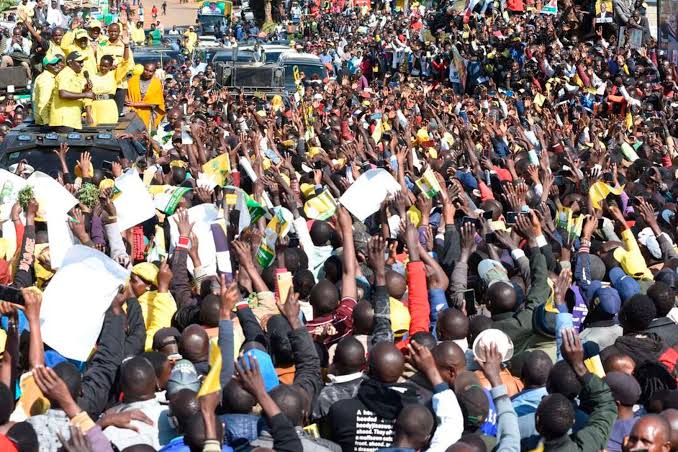
For campaign strategists, these realities make poorer communities politically indispensable.
Imagine spending one day campaigning in an affluent suburb where many residents travel frequently, have lower turnout or feel disconnected from electoral politics.
Now compare that with spending the same day in a densely populated settlement where thousands of registered voters live, community meetings attract large crowds and political discussions dominate everyday conversation.
The electoral return is very different.
This does not mean politicians value poor citizens more as people.
It means they value communities where political investment is most likely to produce votes.
Understanding this distinction helps explain why some communities receive repeated political attention, while others appear largely ignored during campaigns.
Electoral Efficiency: Poor Communities Are Not Politically Cheap. They Are Politically Efficient.
It is often said that politicians target poorer communities because votes are “cheap.”
This oversimplifies what is happening.
Campaigns are not searching for the cheapest individual vote.
They are searching for the greatest return on political investment.
Visualise, a campaign spends one million shillings organizing an event.
In one location, the event reaches two hundred potential voters.
In another, it reaches five thousand people directly and thousands more indirectly through local networks.
The second event has not necessarily purchased more votes.
It has simply produced greater political reach.
This is campaign efficiency.
Poorer communities often possess characteristics that make campaigning highly efficient.
High population density. Strong community interaction. Shared public spaces. Active religious institutions. Youth organisations. Savings groups. Women’s associations. Local markets.
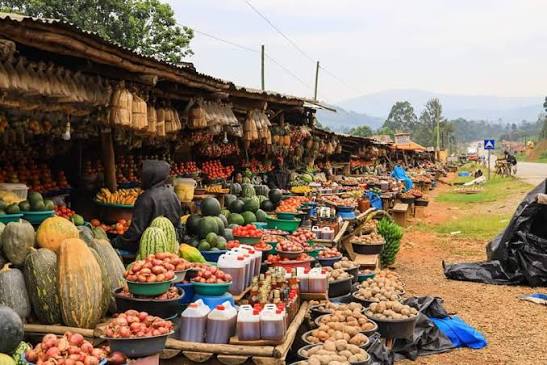
Campaign messages spread quickly through these networks.
One meeting can influence thousands of conversations.
One respected local leader can shape community opinion.
One church gathering can reach an entire neighbourhood.
From a campaign perspective, this is remarkably efficient.
Politicians therefore invest where existing social networks multiply their message.
Electoral Access: Community Networks Are Political Infrastructure
Campaigns rarely persuade millions of citizens one by one.
Instead, they work through relationships.
Every community has people whose opinions carry unusual weight.
Religious leaders. Village elders. Women’s group leaders. Youth organizers. Market association officials. Boda boda SACCO chairpersons. Teachers. Community health volunteers.
These individuals become political bridges between campaigns and citizens.
Winning their confidence often provides access to hundreds or even thousands of voters.
This explains why politicians spend so much time attending funerals, church services, weddings, football tournaments and community fundraisers.
To outsiders, these appearances may seem symbolic.
In reality, they are politically strategic.
They strengthen relationships with trusted community figures who already possess influence.
Politics therefore spreads through trust long before it spreads through campaign posters.
Electoral Incentives: Patronage and Reciprocal Expectations
Perhaps no aspect of African politics is discussed more often than patronage.
Yet it is also one of the least understood.
Patronage is often described simply as politicians giving favours in exchange for votes.
Reality is considerably more complex.
Imagine a community where the local hospital frequently runs out of medicine.
School bursaries are insufficient.
Emergency support from the government is slow.
Employment opportunities are scarce.

Then imagine a Member of Parliament who contributes to hospital bills, helps families pay school fees, donates during funerals, supports church construction and funds local youth tournaments.
Over time, that politician becomes more than a lawmaker.
They become a problem solver.
Citizens begin expecting assistance.
Politicians begin expecting political support.
Neither side may openly acknowledge this exchange.
Yet both understand the relationship.
This creates what political scientists describe as clientelism, but what many citizens simply experience as mutual obligation.
The politician demonstrates generosity.
The community demonstrates loyalty.
These relationships often emerge not because citizens reject strong institutions, but because strong institutions have not consistently met their needs.
Where institutions are weak, personal relationships become politically valuable.
Why Campaign Promises Change from One Community to Another
Many citizens notice that politicians speak differently depending on where they campaign.
This is not accidental.
Campaigns rarely deliver identical messages everywhere.
A candidate addressing business leaders may emphasize taxation, investment, regulation and economic growth.
The same candidate addressing a rural farming community may focus on fertilizer subsidies, irrigation or market access.
Speaking in an informal settlement, the conversation may shift toward housing, sanitation, healthcare, employment or food prices.
Critics sometimes describe this as inconsistency.
In reality, it reflects a basic principle of democratic competition.
Citizens experience government differently.
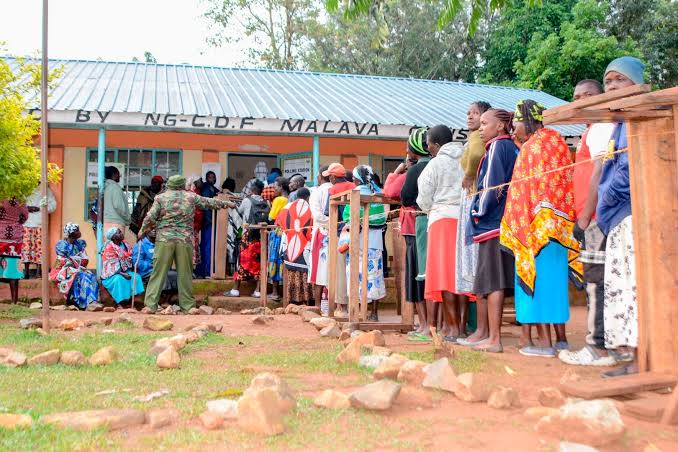
Campaigns therefore respond to different priorities.
The danger arises when politicians promise whatever a community wishes to hear without intending to deliver.
Over time, repeated cycles of unrealistic promises weaken public trust and reinforce political cynicism.
Citizens become skeptical.
Politicians become increasingly performative.
Democracy gradually shifts from governing to permanent campaigning.
Why This Is Not Simply Vote Buying
A further stereotype, directed at poorer voters is that they “sell their votes.”
Such statements are emotionally powerful.
They are also often analytically weak.
Vote buying suggests a straightforward commercial exchange.
Money for a vote.
But reality is rarely so simple.
Many citizens accept campaign assistance from multiple candidates.
Some attend every rally regardless of political preference.
Others accept donations while voting differently in secret.
Many understand perfectly well that politicians become unusually generous during election seasons.
Some even joke that elections are the only period when leaders remember ordinary citizens exist.
Receiving campaign assistance does not automatically determine political behaviour.
Nor does every donation constitute corruption.
The relationship is often embedded within years of community interaction, familiarity and reciprocal expectation.
Reducing these complex social relationships to “vote buying” prevents us from understanding why they persist.
Additionally, understanding is not the same as approval. But democratic reform begins with understanding reality rather than caricaturing it.
Democracy Learns from Every Election
Perhaps the most important lesson is that citizens are not the only people learning during elections.
Politicians learn too.
After every election, citizens assess:
Who came back after winning?
Who kept their promises?
Who disappeared?
Who actually helped the community?
Politicians ask different questions.
Which messages worked?
Which communities turned out in large numbers?
Which local leaders influenced opinion?
Which promises generated enthusiasm?
Which campaign activities produced votes?
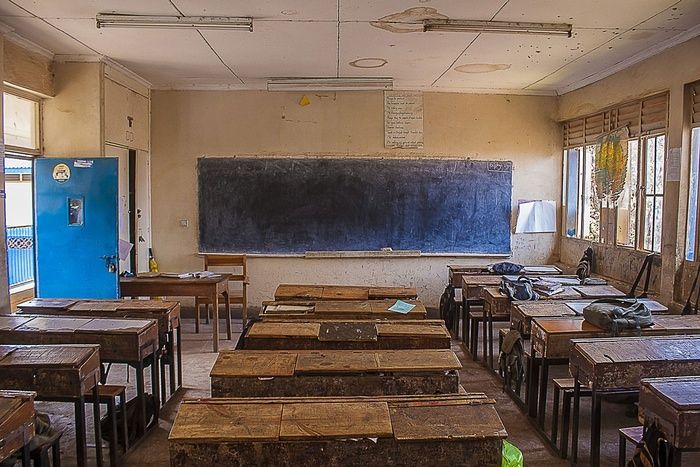
Every election becomes a classroom.
Citizens adjust their expectations.
Politicians adjust their strategies.
Each responds to what the other rewarded during the previous election.
And this creates a powerful feedback loop.
If communities reward visibility more than policy, politicians become more visible.
If citizens reward personal assistance more than institutional reform, campaigns invest more heavily in patronage.
If politicians repeatedly fail to deliver without electoral consequences, expectations decline.
Over time, these repeated interactions shape political culture itself.
Neither citizens nor politicians operate in isolation.
Each influences the behaviour of the other.
The Relationship That Shapes Democracy
The relationship between poverty and politics is therefore often misunderstood.
With the poor citizens frequently portrayed as passive victims of manipulation.
And politicians portrayed simply as opportunists exploiting hardship.
Reality is more complicated.
Citizens adapt to economic insecurity.
Politicians adapt to electoral incentives.
Both respond rationally to the circumstances they face.
Democracy is shaped by that interaction.
This is why reducing poverty is not only an economic objective.
It is also a democratic one.

As citizens become more economically secure, they gain greater freedom to evaluate leaders beyond immediate survival.
As institutions become stronger, politicians rely less on personal patronage and more on public performance.
Politics gradually shifts from transactional relationships toward programmatic competition, based on ideas, policies and institutional effectiveness.
Until then, poverty will continue to shape not only how citizens vote, but also how politicians campaign, how governments allocate attention and ultimately, the kind of democracy societies are able to build.
The question, therefore, is not simply why politics matters so much to those who have the least.
The deeper question is this:
Can a democracy truly become programmatic and accountable while millions of citizens remain politically dependent on survival?
Watch the Companion Video
This article is accompanied by a video discussion that explores the topic in greater depth, with additional context, examples, and analysis
Editorial & Copyright Notice : This publication is intended for commentary, analysis, civic education, research, and public discourse. Any third-party photographs, news images, headlines, screenshots, or other visual materials used in connection with this article are included for illustrative, contextual, analytical, or educational purposes related to matters of public interest. Copyright in such materials remains with the respective rights holders. Their inclusion does not imply ownership, endorsement, or affiliation unless expressly stated.