
Why Those Best Positioned to Shape Public Thinking Often Remain on the Political Margins
When we think about democracy, we often think about elections. We think about political parties, campaigns, manifestos and the leaders who eventually form government. Yet democracy begins much earlier than election day. Before citizens cast a vote, they form opinions. Before governments adopt new policies, someone develops the ideas behind them. Before institutions are reformed, someone identifies what is broken, explains why it matters and imagines how it might be improved.
Healthy democracies therefore depend on more than citizens who vote. They also depend on citizens who help society think.
Every democracy has people whose work involves understanding complex issues, questioning assumptions and explaining difficult ideas. They include academics, teachers, lawyers, doctors, engineers, economists, journalists, researchers, entrepreneurs, civil society leaders, religious leaders, artists and other professionals whose expertise helps society make sense of itself. Collectively, they form what might be called democracy’s intellectual class.

Yet across many developing democracies, an interesting paradox emerges. Those best positioned to shape public thinking often remain on the political margins. They discuss governance, analyse public policy and understand institutions, but many participate only occasionally in the wider democratic conversation. Their influence often remains confined to classrooms, professional circles, research papers, conference rooms, or election-season commentary.
This is often explained in two ways. Some argue that intellectuals have become detached from ordinary society, preferring academic discussions to public engagement. Others believe politics has simply become too confrontational, too expensive, or too frustrating for thoughtful people to enter. Both explanations contain some truth. Neither fully explains why this pattern persists across so many democracies.
The more interesting question is not whether educated citizens should participate more. It is why democratic systems often struggle to create conditions that encourage those with the greatest capacity to shape public thinking to exercise that influence consistently.
To answer that question, we must first understand what the intellectual class actually is—and why democracy needs it.
Democracy Needs Thinkers, Not Just Voters
Public debate often treats intellectualism as though it simply means having a university degree. The two are related, but they are not the same.
Education describes what someone has studied. Intellectualism describes how someone thinks.
It is a habit of curiosity. A willingness to examine evidence before reaching conclusions. A readiness to question assumptions, listen to opposing views and change one’s mind when presented with better evidence.
This way of thinking is not confined to universities. A mechanic who patiently diagnoses a complicated engine problem demonstrates intellectual discipline. A farmer who experiments with different planting methods and carefully evaluates the results shows intellectual curiosity. An entrepreneur who challenges conventional wisdom and learns from repeated failure may be deeply intellectual despite having little formal education.

At the same time, someone may possess multiple academic qualifications while showing very little curiosity, openness, or critical thinking. Intellectualism is therefore not a title or a social status. It is a way of engaging with the world.
Democracies need more than educated citizens. They need people who can simplify complex ideas without oversimplifying them, challenge popular assumptions without dismissing ordinary experience and help citizens make sense of increasingly complicated public questions.
From this perspective, democracy’s intellectual class is not defined by wealth or prestige. It is made up of people whose education, experience, writing, research, or leadership gives them an unusual capacity to shape public understanding.
Importantly, this does not make them more valuable than other citizens. Democracy rightly treats every vote as equal. What differs is not political worth, but civic opportunity. Some citizens have greater capacity to influence how society understands itself, and with that opportunity comes a unique responsibility.
Ideas rarely win elections directly. Yet they often determine what future elections will be about.
Long before governments pass new laws, someone has spent years researching the problem, testing solutions, debating alternatives, and persuading others that change is necessary. Universities, think tanks, professional associations, newsrooms, civil society organisations and community leaders quietly shape the ideas that eventually become public policy.
In this sense, democracy’s intellectual class performs a role similar to a country’s research and development department. Businesses invest in research before launching new products. Democracies also require people who continually develop better ideas, question outdated assumptions, and imagine better institutions.
Without this constant production of ideas, political debate gradually shifts away from substance. Personalities begin to matter more than policies. Slogans replace evidence. Short-term political competition overshadows long-term institutional development.
Democracy therefore depends not only on people who govern. It also depends on people who expand society’s capacity to think.
The Democratic Paradox
If democracy benefits so greatly from an active intellectual class, another question naturally follows.
Why do so many of the people best positioned to strengthen public thinking remain politically distant?
At first glance, this seems counterintuitive. We often assume that greater education naturally leads to greater political engagement. If people better understand institutions, economics, law, or governance, shouldn’t they become more active participants in strengthening democracy?
Reality is more complicated. Political participation is shaped not only by knowledge, but also by incentives.
Just as poorer citizens make political choices within the realities of economic survival, professionals make political choices within the realities of career, reputation, family and opportunity. Neither group behaves irrationally. Each responds to the environment within which democracy asks them to participate.
For many professionals, public politics demands significant personal sacrifice while offering uncertain prospects for meaningful impact. Politics requires time, financial resources, constant public visibility, and a willingness to endure criticism, scrutiny, and partisan conflict.

For someone who has spent decades building a respected medical practice, legal career, engineering firm, or research portfolio, entering politics often means placing much of that work at risk. Unlike most professions, political careers offer no guarantee of stability. Years of preparation can end in defeat on a single election day.
Many therefore conclude that they can contribute more effectively by remaining excellent doctors, judges, teachers, engineers, entrepreneurs, or researchers than by entering electoral politics. This is not necessarily a rejection of democracy. It is a rational response to the incentives democracy currently offers.
Professional life also rewards a different way of thinking from political life.
Researchers are trained to acknowledge uncertainty. Scientists revise conclusions when new evidence emerges. Lawyers examine competing arguments before reaching judgment. Good scholarship values complexity.
Politics often rewards the opposite. Public debate favours confidence over caution, certainty over nuance, and simple answers over complicated explanations. A politician who frequently says, “It depends,” risks appearing indecisive. A researcher saying the same thing may simply be demonstrating intellectual honesty.
These are different cultures operating under different incentives. Many intellectually minded citizens therefore find modern political competition uncomfortable—not because they dislike democracy, but because they struggle with the way democratic competition is often conducted.
Modern media has amplified this tension. Today’s information environment increasingly rewards visibility over depth, speed over reflection, and confrontation over careful analysis. A thirty-second political exchange may receive more attention than a thirty-page policy paper. Thoughtful analysis often struggles to compete with emotionally charged messaging.
Faced with these realities, many members of the intellectual class continue producing excellent work—but largely for audiences already interested in research, policy, or professional debate. The broader democratic conversation increasingly unfolds elsewhere.
The result is an unfortunate separation. Politics becomes increasingly visible. Expertise becomes increasingly invisible.
This separation does not happen because knowledge lacks value. It happens because many democracies have built weak bridges between knowledge and political influence.
Universities continue producing research that rarely reaches ordinary citizens. Policy experts publish reports that seldom shape public discussion. Professional expertise remains concentrated within specialised institutions while political debate increasingly rewards performance over evidence.
The challenge, therefore, is not simply that intellectuals withdraw. It is that democracy often struggles to convert knowledge into public influence.
Exit Rather Than Voice
Perhaps the greatest reason many members of the intellectual class remain on the political margins is not that they stop caring about democracy. Rather, they gradually stop believing that direct engagement is the most effective way to improve it.
Political scientist Albert Hirschman described two common responses when people become dissatisfied with an institution: voice and exit.
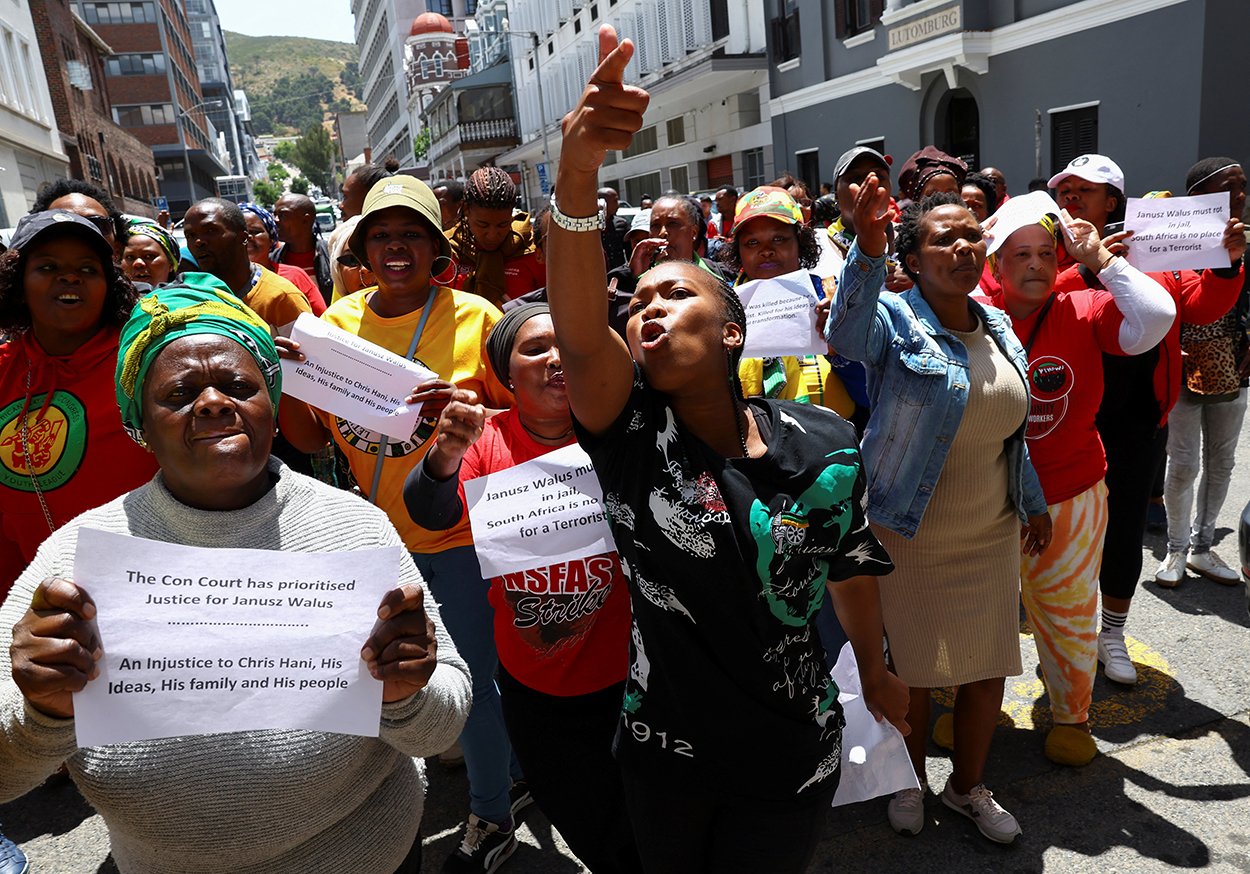
Voice means trying to improve the system from within. Citizens organise, advocate, challenge leaders, demand reform, and work to strengthen public institutions. Exit, by contrast, means quietly reducing dependence on the system. Instead of fixing failing institutions, people create alternatives for themselves.
This framework helps explain a pattern that is becoming increasingly visible in many developing democracies.
As education, professional success and income increase, many citizens become less dependent on public services. When public schools decline, they move their children to private schools. When public healthcare becomes unreliable, they purchase private medical insurance. When security weakens, they move into gated communities or hire private security. When public transport becomes inefficient, they buy private vehicles.
Each decision is understandable. Each solves an immediate problem. Yet together they produce an unintended political consequence.
The very citizens with the greatest resources, education and professional capacity to demand stronger public institutions gradually become less dependent on those institutions. Instead of reforming public systems, they increasingly build private alternatives.
They have, in Hirschman’s language, chosen exit over voice.
The Quiet Privatization of Citizenship
Over time, this produces what might be called the quiet privatization of citizenship.
People continue paying taxes. They continue voting, at least occasionally. They remain concerned about national affairs. Yet much of everyday life is no longer experienced through shared public institutions.
Education becomes private. Healthcare becomes private. Security becomes private. Recreation becomes private. Even social life increasingly moves into private spaces.
As this happens, government failure feels less immediate—not because the government has improved, but because many citizens have found ways to reduce their day-to-day dependence on it.
This insulation, however, is only partial.
No one can privately purchase macroeconomic stability. No business can escape the effects of inflation, unpredictable taxation, weak courts, or declining investor confidence. Private schools still operate within national education systems. Private hospitals still depend on public regulation. Businesses still rely on roads, electricity, stable institutions, and the rule of law.
In other words, exit is never complete. It simply delays direct exposure to the consequences of poor governance.
The question, therefore, is not whether politics affects the intellectual class. It already does.
The real question is whether the intellectual class chooses to shape politics before politics reshapes their circumstances.
The Cost to Democracy
The consequences of this gradual withdrawal extend far beyond individual citizens.
Healthy democracies depend on many groups bringing different interests into public debate. Businesses seek stable regulation. Workers seek decent wages. Young people seek opportunity. Professionals seek competent institutions. Communities seek reliable public services.
Democracy works best when these different voices meet, compete and eventually shape public policy.
But when one major group participates less consistently, the democratic conversation changes.
Political parties naturally invest more time and resources where political returns are highest. They pay greater attention to communities that organise, mobilise and vote consistently. Campaigns follow active voters. Public messaging follows politically engaged audiences.
This is not necessarily because politicians deliberately ignore professionals or educated citizens. It is because democracy, like markets, responds to incentives.
When the intellectual class withdraws, it does not create a political vacuum. It simply leaves more space for others to define the national conversation.
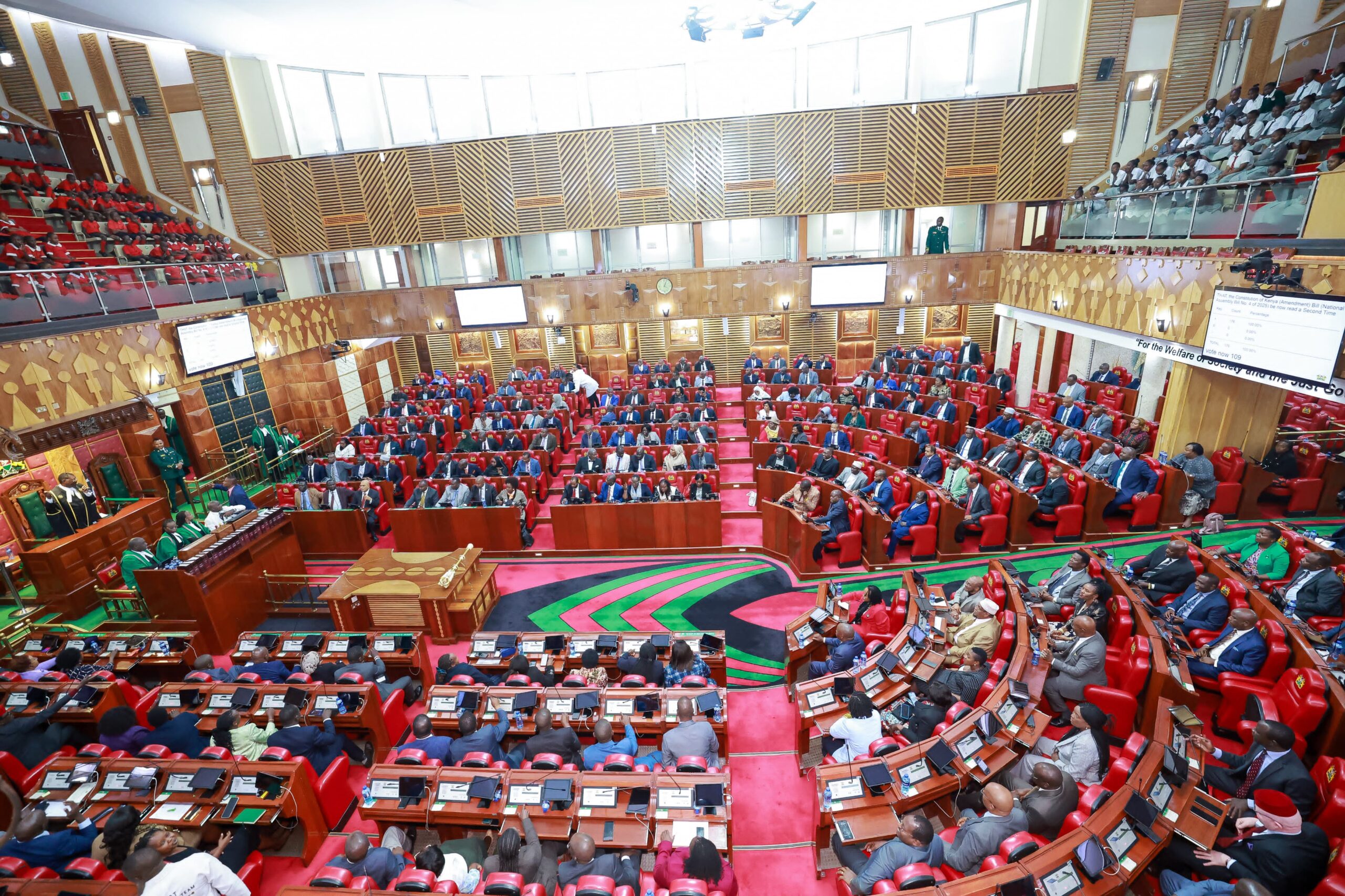
Politics does not pause because thoughtful people become frustrated. Laws are still passed. Budgets are still approved. Institutions continue to strengthen—or weaken.
The only difference is who remains in the room when those decisions are shaped.
This helps explain why many democracies appear trapped in recurring political cycles.
Poor citizens remain highly engaged because politics directly affects their survival. Politicians continue focusing on the communities that consistently determine electoral outcomes. Meanwhile, many professionals increasingly concentrate on private success while distancing themselves from sustained civic engagement.
None of these choices is irrational. Each reflects the incentives people face.
Yet together they reinforce one another, creating a democratic equilibrium in which institutions struggle to improve because many of the citizens best positioned to strengthen them have gradually stepped back from the public arena.
Responsibility Without Blame
Recognising this pattern should not lead to blaming the intellectual class.
Members of this group are not more important than other citizens, nor do they possess greater political rights. Democracy rightly treats every vote as equal.
Their responsibility arises for a different reason. Where influence carries obligation.
Teachers shape generations of students. Journalists influence public conversations. Researchers expand knowledge. Lawyers shape public understanding of justice. Doctors command public trust. Entrepreneurs demonstrate new ways of solving problems. Engineers design systems that improve everyday life.
Whether they seek it or not, these professions already influence society. The question is whether that influence also extends into civic life.
This does however not mean every professional should run for public office. In fact, most should not. Democracy needs excellent teachers who remain teachers, principled judges who remain judges and dedicated researchers who continue producing knowledge.
What democracy needs is something less dramatic, but more important: active citizens who consistently improve the quality of public thinking.
That contribution can take many forms. Writing, teaching, mentoring, serving on public boards, supporting civic organisations, explaining complex issues in accessible language, encouraging evidence-based debate and holding leaders accountable regardless of political affiliation.
These contributions rarely make headlines. Yet over time they often shape democracy more deeply than individual election campaigns.
Politics determines who governs. Ideas help determine how societies choose those who govern.
Building Democracies Where Ideas Matter
One of the greatest misconceptions about democracy is that elections alone produce better governance.
They do not.
Elections simply aggregate the choices available to citizens at a particular moment. The quality of those choices depends on everything that happens before election day—education, public debate, research, media, civic organisations, professional associations, families, and communities.
Political parties compete within the intellectual environment that society creates. If public debate consistently rewards slogans, politicians become better at slogans. If citizens increasingly reward evidence, competence and thoughtful leadership, political competition gradually adapts to those expectations.
History illustrates this well.
Countries such as South Korea, Taiwan and Estonia did not strengthen their democratic institutions simply because better politicians appeared. They improved because the relationship between knowledge and governance became stronger. Universities, researchers, journalists, professionals and civic organisations increasingly influenced public policy, while political institutions became more willing to draw upon expertise.
No country’s journey is perfect and these examples should not be romanticised. But they demonstrate an important lesson: democracies improve when societies change what they reward.
Many developing democracies may already be moving in that direction. Expanding access to higher education, digital technology and independent media has created a generation that is more informed, more connected and more willing to question authority than previous generations.
The unanswered question is whether this generation will remain primarily commentators, or whether it will build the civic institutions capable of turning ideas into lasting democratic change. History suggests that ideas become transformative only when they are organised and institutions matter more where they preserve ideas long after individual voices have faded.
Conclusion
Public debate often asks whether intellectuals care enough about politics.
A better question is whether democracy creates conditions that make sustained civic engagement by its intellectual class both meaningful and worthwhile.
Participation is rarely determined by knowledge alone. It is shaped by incentives, trust, institutions, opportunity and the belief that one’s efforts can genuinely make a difference.
Just as better information does not automatically produce better political choices, greater education does not automatically produce greater democratic engagement.
The challenge, therefore, is larger than encouraging more professionals to “join politics.” It is about building democracies where ideas matter. Where evidence carries influence. Where institutions reward competence. Where civic participation is valued beyond election seasons. And where citizens—regardless of profession—believe that thoughtful engagement can genuinely shape the future.
The health of a democracy depends not only on the quality of its leaders or the enthusiasm of its voters. It also depends on whether those best positioned to expand society’s thinking choose to remain spectators—or become active participants in the democratic conversation.
Watch the Companion Video
This article is accompanied by a video discussion that explores the ideas presented above through additional context, examples, and analysis.
Editorial & Copyright Notice
This publication is intended for commentary, analysis, civic education, research, and public discourse. Any third-party photographs, news images, headlines, screenshots, or other visual materials used in connection with this article are included for illustrative, contextual, analytical, or educational purposes related to matters of public interest. Copyright in such materials remains with the respective rights holders. Their inclusion does not imply ownership, endorsement, or affiliation unless expressly stated.